Asphalt on Asphalt

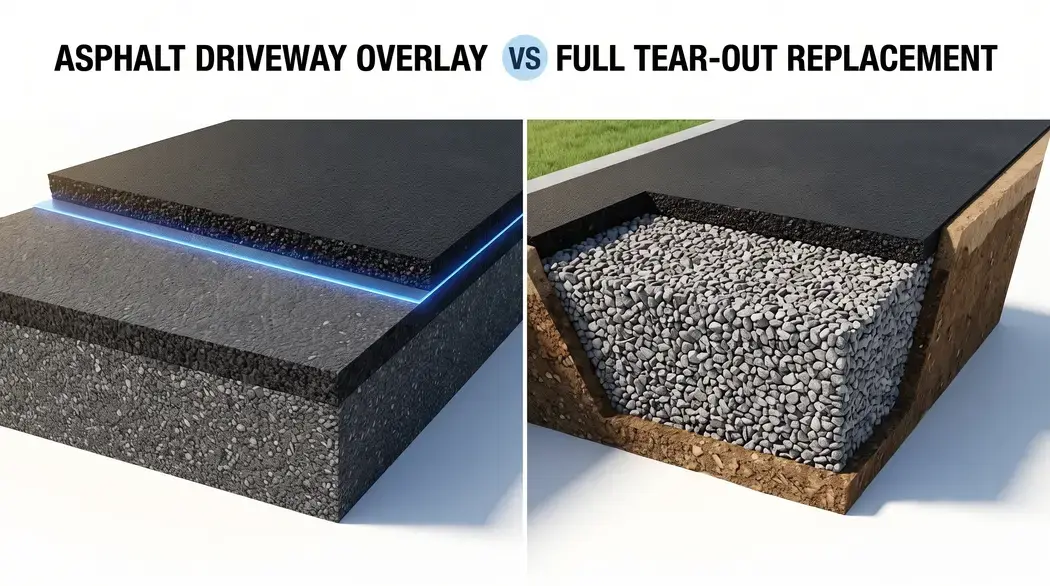
Cross-section diagram showing the comparison between asphalt driveway overlay and full tear-out replacement layers.

Can You Lay Asphalt on Asphalt? Complete Overlay & Resurfacing Free Guide 2026

When an asphalt driveway or parking lot starts to show signs of damage, surface loss of color, or minor cracking, homeowners and property managers face a key crossroad: Should you rip out the old pavement completely, or can you pave directly over it?

The short answer is yes, Laying asphalt on asphalt (usually known as an asphalt overlay or resurfacing) is a fundamentally sound and cost-effective approach. But it only works under the right state. Paving over a weak or deteriorating base will lead to early failure, although overlaying a sound structure can expand your pavement’s lifespan by 10 to 15 years at half the cost of a total installation.

Can You Put Asphalt Over Existing Asphalt?

Before planning a paving team, you must find whether your current pavement qualifies for an overlay or needs a full tear-out and sub-base reconstruction.

  • Candidate For Overlay: Solid sub-base structure, minor small surface cracks, surface oxidation/fading, and whole drainage slope.
  • Requires Full Replacement: Deep alligator/spiderweb cracks, depressed areas or road holes, soft soil subgrade, and major slope issues.

When Is an Asphalt Overlay Possible?

An asphalt overlay is best when the surface damage is solely cosmetic or small to the top damage layer. For an overlay to work, the existing pavement must have:

  • A steady, well-compressed crushed stone or road base under it.
  • Less than 20–30% whole surface cracking.
  • No major water removal defects.

When Full Tear-Out Is Required

Laying asphalt on asphalt over a breaking down foundation is a costly mistake. You must work a complete tear-out and repave if you watch:

  • Alligator Cracking: linked, web-like cracks that show a compromised sub-base foundation.
  • Sunken Potholes or Soft Spots: Low spots caused by water entry the sub-base layer.
  • Edge Crumbles: Common structural deterioration near the borders.

Asphalt Overlay vs Full Replacement: Key Differences

Awareness the functional and financial compromises between resurfacing and a complete replacement helps you make an informed selection for your project.

FeatureAsphalt Overlay (Resurfacing)Full Tear-Out & Repave
Primary ObjectiveSurface repair & life growthComplete structural repair
Average Cost $1.75 – $3.50 per sq. ft.$4.00 – $8.00 per sq. ft.
Lifespan Addition10 – 15 years20 – 30 years
Sub-Base WorkMaintains existing sub-baseReplaces aggregate road base
Project Duration1 Day2 – 4 Days

Cost Comparison: Resurfacing vs. Repaving

Resurfacing cuts important on labor, heavy earthwork, and removal fees. Because the current asphalt works as an ultra-solid, compressed base layer, contractors do not need to clear tons of soil or transport in fresh aggregate.
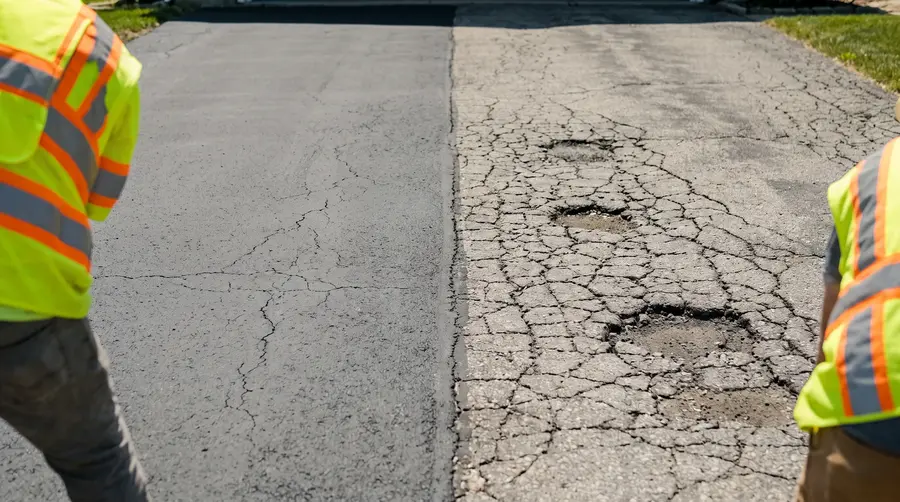
Workers in high-visibility safety gear preparing pavement surface before applying asphalt on asphalt
Comparing existing pavement surface condition before laying a new asphalt on asphalt.

Lifespan Expectations for Paving Asphalt Over Asphalt

When installed over a steady surface with correct tack coat bonding, a standard 1.5 to 2-inch asphalt overlay adds 10 to 15 years of Functional life.
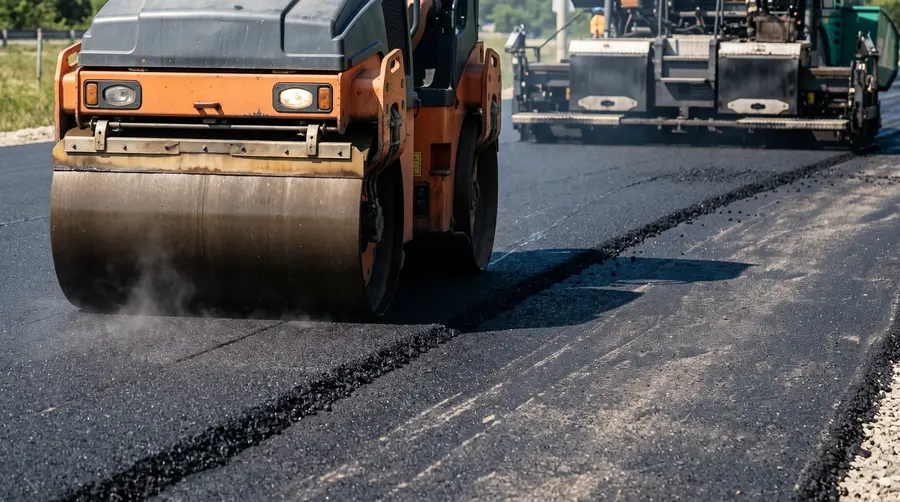
Heavy road roller compactor compacting asphalt on asphalt during driveway paving.
Heavy compaction roller laying and smoothing asphalt on asphalt driveway surface.

Pros and Cons of Laying Asphalt on Asphalt

CategoryProsCons
Asphalt Overlay (Resurfacing)40% – 50% lower cost
Fast 1-day installation
Reuses existing base
Risk of reflective cracking
Raises pavement height/elevation
Requires a sound sub-base
Full Replacement (Tear-Out & Repave)Completely new sub-base foundation
Longer lifespan (20–30 years)
Eliminates existing height issues
High excavation & labor costs
Longer completion time (2–3 days)
Creates heavy material waste

Limitations: Reflective Cracking & Elevation Issues

  • Reflective Cracking: Cracks in the base layer can slowly show up through the new asphalt surface over time.
  • Height & Clearance Limits: Adding 2 inches of new asphalt Increases the overall grade. This can make lip modifications at garage doorways, curbs, or sidewalks.

Step-by-Step Process for Resurfacing Asphalt Driveways

To confirm long-term performance, expert paving contractors use a strict 4-step resurfacing protocol:

Step 1: Surface Cleaning and Sweeping

The current blacktop must be completely cleared of dirt, debris, oil stains, and plants. Any loose gravel or broken surface parts are cleaned away using industrial wire brushes and power blowers.

Step 2: Milling and Edging Adjustments

To avoid uncomfortable lip transitions at garage doors and gutters, contractors perform edge milling. A milling machine crushes down a 12-to-18-inch border throughout nearby concrete driveway entrance so the new asphalt layer rests flush.

Step 3: Applying Tack Coat (Asphalt Bonding Glue)

A heavy fluid asphalt mixture – Recognized as a tack coat – is applied uniformly across the whole clean surface. This acts as an industrial glue, by heat bonding the new hot mix layer to the old asphalt pavement.

Step 4: Laying and Compacting the New Asphalt Layer

Hot mix asphalt is extended over the surface at a temperature between 275 F and 300 F. Heavy steel-drum vibratory rollers compress the material down to a smooth, dense 1.5 to 2-inch completed thickness.

How Much Does Laying Asphalt on Asphalt Cost?

On typical, an asphalt overlay costs between $1.75 and $3.50 per square foot for materials and installation.

  • Normal 500 sq. ft. Driveway: $875 – $1,750
  • Large 1,000 sq. ft. Driveway: $1,750 – $3,500

Factors affecting the final price include current crude oil market rates, local transporting distances, surface fixes prior to paving, and the total thickness purchased.

How to Calculate Materials Needed for an Asphalt Overlay

Exactly figuring out your asphalt requirements is necessary to prevent overpaying on mix or running short during a pour.

How Many Inches of Asphalt Do You Need for Resurfacing?

For typical residential driveways, a compacted depth of 1.5 to 2 inches of hot mix asphalt is the industry-standard. Commercial parking lots carrying more substantial delivery traffic typically require 2.5 to 3 inches.
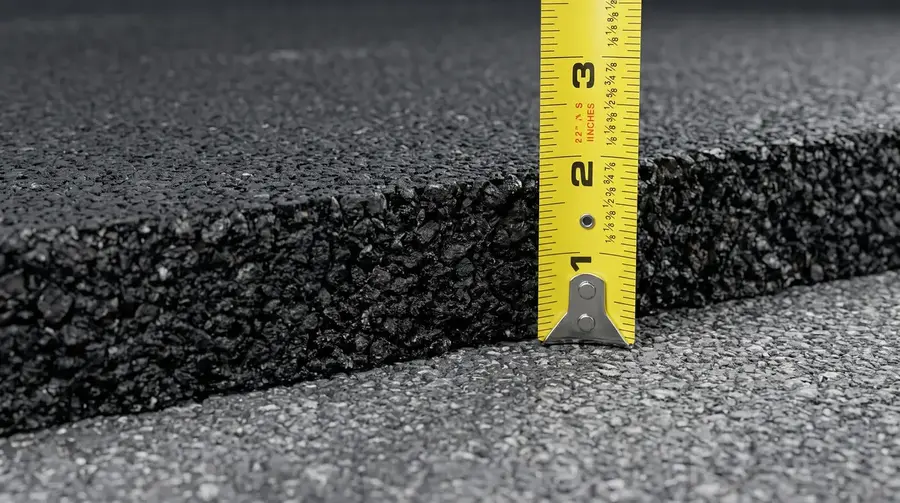
Measuring asphalt thickness with a yellow measuring tape during asphalt overlay installation
Calculation asphalt on asphalt the exact thickness of an asphalt layer before overlaying.

Estimating Material Tonnage Using Formulas

Hot-mix asphalt has a weight of 145 lbs per cubic foot or roughly 2.05 tons per cubic yard.

To calculate required tonnage manually:

  • Volume (cu. ft.) = Length (ft) × Width (ft) × { Thickness (in) } / 12
  • Total Tons = Volume (cu. ft.) × 145 lbs/ cu. ft. / 2000

Skip the Manual Math: Avoid calculation errors by using our free Asphalt Calculator to immediately estimate your total tonnage, material volume, and projected costs before asking for contractor quotes.

Cubic Feet to Cubic Yard Conversion Ratio

When purchasing base materials, sub-base aggregate, or asphalt millings from stone pits, volume is often quoted in cubic yards instead than cubic feet.

  • 1 Cubic Yard = 27 Cubic Feet
  • Change Formula: Cubic Yards = Total cubic Feet / 27

Understanding this basic unit connection makes it easy to change job site foot dimensions into quarry delivery units.

How to Use the Cubic Yard Calculator

If you are preparing a stone sub-base or estimating bulk aggregates before paving,

follow these steps:

  • Measure the Site: Note the exact length and width of your driveway area in feet.
  • Determine Layer Depth: Choose on your gravel or asphalt depth in inches (e.g., 2 inches for asphalt, 4 inches for base stone).
  • Calculate Volume: Input your measurements into our free online Cubic Yard Calculator to obtain instant cubic yardage and tonnage figures.

Alternative Resurfacing Options: Using Asphalt Millings

For countryside driveways, farm entry roads, or cost-conscious projects, recycled asphalt millings provide an excellent alternative to hot-mix asphalt.

Asphalt millings are broken, recycled pavement parts removed during highway milling projects. When apply and rolled under heavy heat, the residual bitumen combines together to form a semi-solid, low-cost pavement. You can estimate required recycled tonnage using a advanced Asphalt Millings Calculator.

How Much do Different Types of Asphalt on Asphalt Cost per Ton?

Asphalt pricing varies based on the specific type required for project:

  • Hot Mix Asphalt (HMA): $80 – $160 per ton for key paving project
  • Warm Mix Asphalt (WMA): $110 and $210 per ton for eco-friendly.

Frequently Asked Questions (FAQs)

Can you pave over cracked asphalt?

Yes, but only if the cracks are minor fine cracks. Severe alligator cracking or profound sub-base Low spots must be repaired or covered prior to using an asphalt overlay.

What is the cost difference between an asphalt overlay vs replacement?

An asphalt resurfacing costs $1.75 to $3.50 per sq. ft., While a whole tear-out and replacement costs $4.00 to $8.00+ per sq. ft., saving you around 50% on installation expenses.

Can an asphalt patch be covered with an asphalt overlay?

Yes. Using an asphalt fix to fill low spots or localized road holes prior to resurfacing provides a smooth, level base for the new top wear layer.

How thick should an asphalt overlay driveway be?

A home driveway overlay should be 1.5 to 2 inches of compressed hot mix asphalt to balance structural longevity with existing water removal and lip clearances.

Can you lay 2 inches of asphalt over existing asphalt?

Yes, A 2-inch compacted layer of hot-mix asphalt is the industry standard for a residential overlay, provided the existing foundation is structurally sound without deep base cracking.

How long does an asphalt overlay last on a driveway?

An asphalt overlay lasts 10 to 15 years when applied over a clean, well-bonded, and stable base.

How do I calculate material needed using an asphalt quote calculator?

Enter your driveway length, width, and preferred depth (in inches) into an asphalt quote calculator to immediately get exact tonnage and estimated material costs before hiring a contractor

What is the difference between an asphalt overlay and an asphalt milling calculator?

An overlay uses new hot-mix asphalt over existing blacktop, while an asphalt milling calculator estimates the tonnage of broken, recycled asphalt aggregate used for eco-friendly base layers.

Is an asphalt overlay better than a full replacement?

If the sub-base is whole with no major sinking, an overlay is much better cost-effectively providing you 80% of the lifespan of a new driveway at nearly half the cost.

Can you drive on fresh asphalt road immediately?

No, Driving on the fresh road. You should wait at least 24 to 48 hours.

Can you pour concrete on top of asphalt?

No, it is generally not best. Pouring concrete make over a week foundation, Causing the hard concrete layer about to fast crack and shift.

How much does a blacktop driveway cost on average?

A blacktop top driveway costs between $3 and $7 per square foot for materials and installation.

How to bond old asphalt to new asphalt effectively?

Asphalt on Asphalt correctly old asphalt to new asphalt, begin by fully clean the surface to remove dirt, dust and holes, waste. As a tack coat at rate of .04 to .07 per square yard.

What is the average of price of asphalt per ton?

Main hot-mix asphalt generally ranges between $80 and $160 per ton, with a nation average dropping between $110 and $125 per ton.

Can you put blacktop over concrete?

Yes, you can put blacktop (asphalt) over concrete, but only if the current concrete base is structurally sound, stable, and properly prepared.

Final Verdict

Laying asphalt on asphalt (an asphalt overlay) is the most cost-friendly and effective way to restore a discoloration, cracked driveway without paying for a full ground removal. As long as your current pavement has a solid sub-base foundation and no deep alligator cracking, an overlay provides up to 80% of the lifespan of a new driveway at nearly half the cost. Earlier hiring a paving contractor, use our free Asphalt Calculator to enter your measurements, estimate exact material tonnage, and design your project cost with complete confidence.
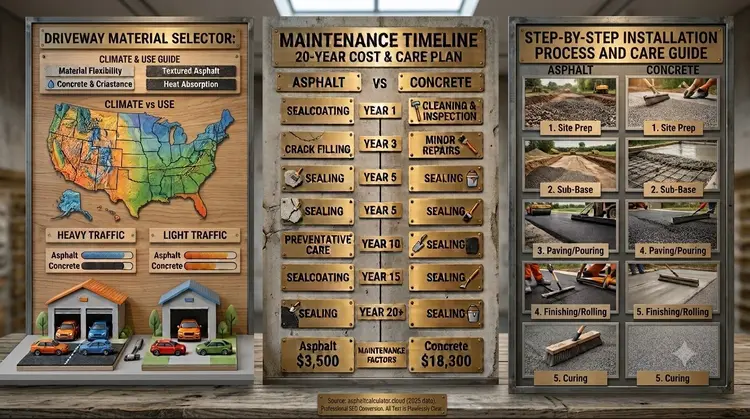
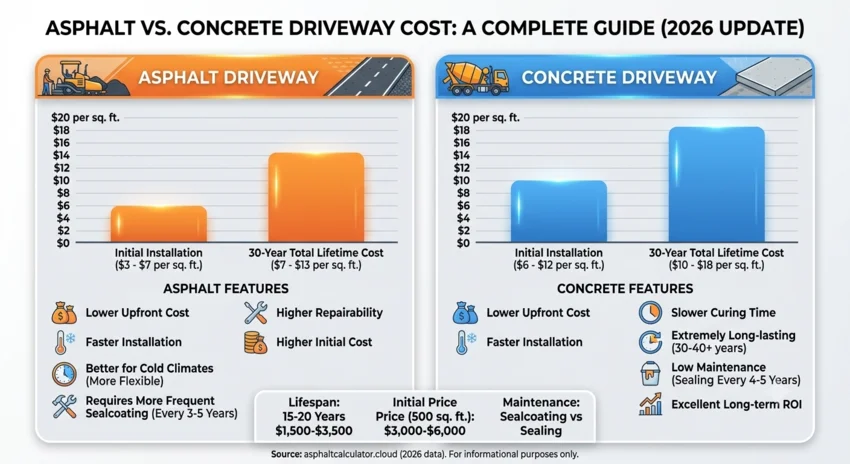
Asphalt vs Concrete Driveway Cost

asphalt vs concrete driveway cost comparison

Driveway Cost Calculator (Asphalt vs. Concrete)

Calculate and compare estimated installation costs based on US national averages.

Asphalt Driveway Avg. $4.00 – $8.00 / sq. ft.
$0 – $0

Estimated Total Cost

Concrete Driveway Avg. $6.00 – $15.00 / sq. ft.
$0 – $0

Estimated Total Cost

Asphalt vs Concrete Driveway Cost: The Ultimate 2026 Price, calculator & Longevity Guide

Compare asphalt vs concrete driveway costs calculator in 2026. Learn installation prices, maintenance, lifespan, repair costs, climate performance, and which driveway offers the best long-term value.

Asphalt vs Concrete Driveway Cost Comparison Chart

Try Our Asphalt vs Concrete Driveway Cost Calculator Below here:

Asphalt vs Concrete Driveway Cost Comparison in 2026

The decision about whether to install an asphalt concrete driveway isn't based solely on the initial cost. Local climate, maintenance requirements, longevity and added value are all important factors. While asphalt offers an affordable price ($3-$7 per sq.ft.), concrete provides a longer lifespan of up to 40 years.

If a homeowner desires a surface that will last and is more affordable, asphalt will be the most budget-friendly choice in 2026. Although it costs more upfront, concrete has a longer lifespan, requires less routine maintenance, and enhances curb appeal.

This guide provides a comparison of the cost of Asphalt Driveways vs Concrete Driveways, reviews the factors which can influence pricing, and helps you determine which is the best investment for your home.

Planning Your Project Budget? Enter your dimensions into our Asphalt Driveway Cost Calculator to get an instant estimate of material tonnage, labor fees, and total installation costs.

Asphalt vs Blacktop: What is the Difference?

Blacktop is the kind of asphalt mixed at higher heat. While standard hot-mix asphalt is used for highways and major roads, blacktop is a mainly use for residential driveways.

Asphalt vs Tarmac: Which One Should You Choose?

Asphalt vs Tarmac are different materials. tarmac is an older technology using tar binder, largely replaced by asphalt today.

Bitumen vs Tar: Key Difference

  • Bitumen is a derived form petroleum crude oil refining. it is non-toxic.
  • Tar is a derived form coal distillation. It was used as a binder.

Asphalt vs Concrete: What is the Difference?

Asphalt is uses petroleum-based bitumen as a flexible binder, but concrete is uses cement.

How Much is Asphalt Per Square Foot?

When estimating the start installation price, asphalt costs between $3 to $7 per square foot for materials and labor. In contrast, a main concrete driveway costs $5 to $15 per square foot.

Material TypeAverage Cost Per Sq. Ft.600 Sq. Ft. Driveway Estimate
Asphalt Paving$3 - $7 per square foot$1,800 - $4,200
Standard Concrete$5 - $15 per square foot$3,000 - $9,000

Why is Asphalt Cheaper Per Square Foot Than Concrete?

  • Lower Initial Material Cost
  • Faster Installation
  • Flexible Maintenance

Asphalt or Concrete Driveway Costs at a Glance

FeatureAsphaltConcrete
Installation CostLowerHigher
Cost per Sq. Ft.$4-$8$6-$15
Lifespan20-30 years30-40 years
MaintenanceModerateLow
Repair CostLowerHigh
Winter PerformanceExcellentGood
Hot ClimateGoodExcellent
Curb AppealGoodExcellent
Best ForBudget HomesLong-Trem investment
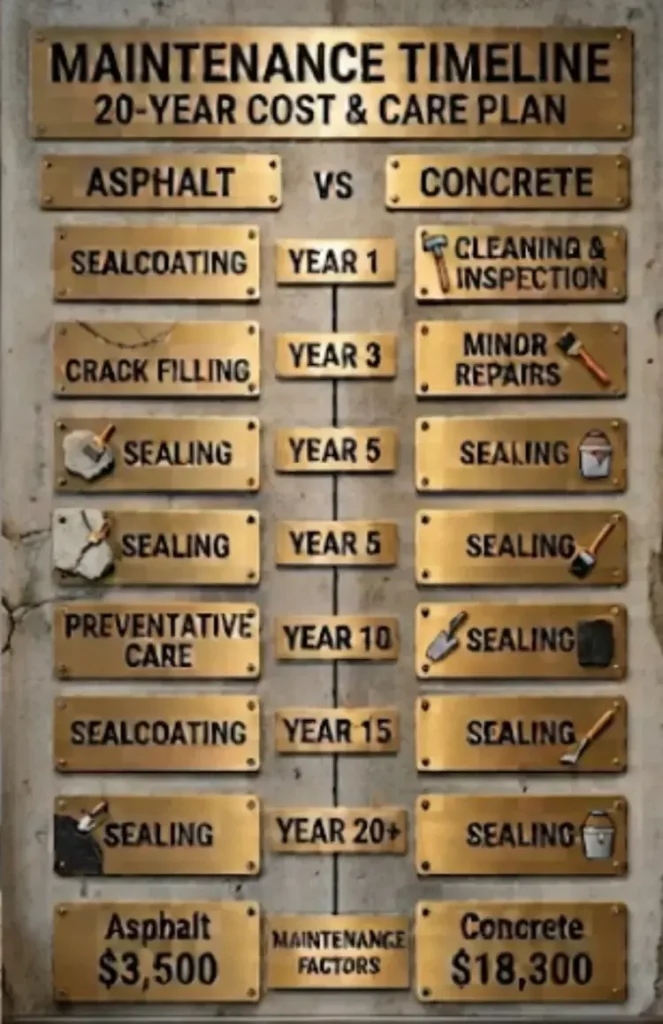
Asphalt vs concrete 20 years cost & maintenance breakdown chart

Can You Pave Asphalt on Asphalt? (Asphalt Resurfacing Guide)

Yes, you can lay asphalt on asphalt a method learn as a an asphalt overlay or resurfacing. As a as the current subbase is systematically sound and free of server alligator cracking or soft spots, Including a new 1.5 to 2-inch layer of asphalt on asphalt can expand your driveway or parking lots lifespan at a fraction of the cost of a full replacement.

What Factors Affect Asphalt or Concrete Driveway Cost?

Several factors influence the total cost of a new driveway other than the square foot price.

These include:

  • Driveway size
  • Thickness - Asphalt or Concrete
  • Existing driveway removal
  • Excavation and grading
  • Base preparation
  • Drainage improvements
  • Decorative finishes
  • Local labor costs
  • Permit fees
  • Geographic location

The more equipment and labor are needed to complete the driveway, the higher the cost of installation will be, and poor soil or heavy excavation can increase the overall installation cost.

Average Asphalt Driveway Cost per sq ft (2026)

  • $4–$8 per square foot
  • Single-car driveway: $2,000–$4,000
  • Double-car driveway: $2,800–$6,500

Asphalt is ideal for homeowners who want a durable driveway without a high upfront investment. It is also one of the fastest driveway materials to install.

Average Concrete Driveway Cost per sq ft (2026)

  • $6–$15 per square foot
  • Single-car driveway: $3,500–$6,000
  • Double-car driveway: $4,500–$10,500

Decorative finishes such as stamped, stained, or exposed aggregate concrete can increase costs to $20+ per square foot.

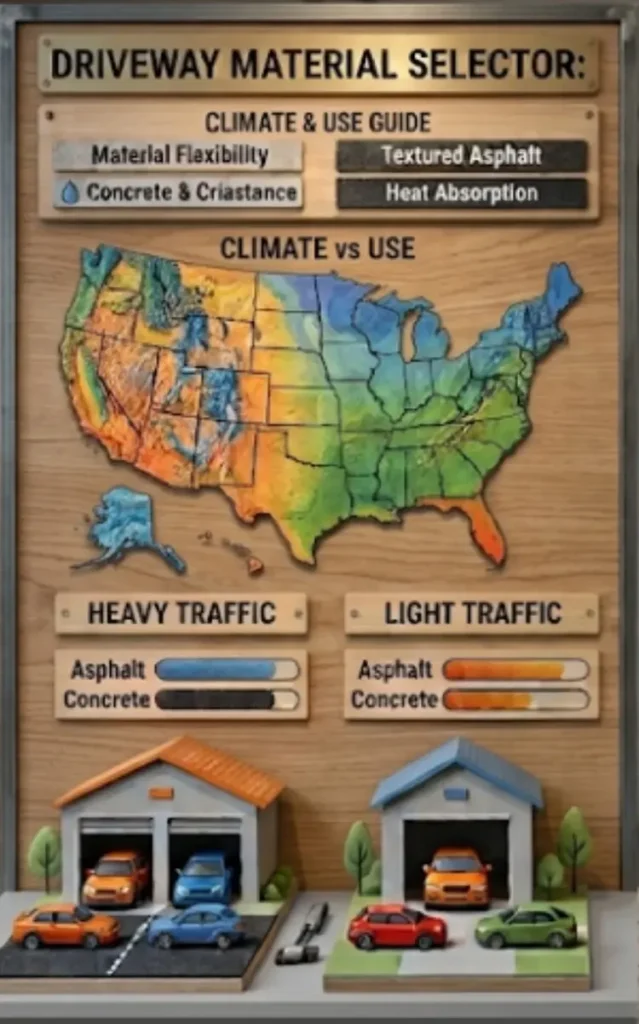
asphalt vs concrete driveway US Regional Cost map

Which Driveway Lasts Longer?

Asphalt concrete generally lasts longer than asphalt when properly installed and maintained.

MaterialAverage Lifespan
Asphalt20-30 Years
Concrete30-40 Years

Driveway lifespan depends on:

  • Local climate
  • Vehicle weight
  • Installation quality
  • Drainage
  • Maintenance schedule

Proper care can extend the lifespan of either material.

Driveway Concrete vs Asphalt: Which Requires Less Maintenance?

When analyzing a driveway concrete vs asphalt installation, asphalt requires considerably more procedure maintenance over its lifespan, while concrete requires less frequent attention.

  • Asphalt Maintenance
  • Seal every 3–5 years
  • Repair cracks promptly
  • Clean oil stains
  • Resurface every 15–20 years
  • Concrete Maintenance
  • Wash regularly
  • Seal every 4–5 years
  • Fill in cracks if necessary
  • Remove stains quickly
  • While concrete repairs are typically more costly, they are also performed less often.

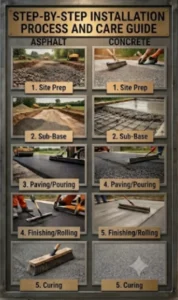
Step-by-step Installation Process and Care Guide

Asphalt and Concrete for both

  • Site Perp
  • Sub-Base
  • Paving/pouring
  • Finishing/Rolling
  • Curing
Asphalt and concrete driveway installation step infographic

Asphalt vs Concrete Driveway Cost Pros and Cons

When you comparing asphalt driveway vs concrete driveway, Asphalt is more affordable.

Factor Asphalt DrivewayConcrete Driveway
ProsFully recyclable
Easy to repair
Often contains recycled pavement
Reflects sunlight
Reduces heat island effect
Long service life
ConsPetroleum-based
Absorbs more heat
Cement production creates higher carbon emissions
Recycling concrete is more difficult

For an eco-friendly option, ask your contractor about recycled asphalt or low-carbon concrete mixes.

Which Driveway Is Better for Snow?

Asphalt performs better in cold climates because it remains flexible during freeze-thaw cycles.

Benefits include:

  • Faster snow melting
  • Better frost resistance
  • Reduced surface cracking
  • Easier snow removal

Concrete also performs well but may require extra care when using de-icing salts.

Signs It's Time to Replace Your Driveway

Your driveway may need replacement if you notice:

  • Large potholes
  • Wide cracks
  • Standing water
  • Uneven surfaces
  • Crumbling edges
  • Frequent repairs
  • Base failure

When repair costs become excessive, replacing the driveway is often the better long-term investment.

Asphalt vs. Concrete Driveway Cost by Region Estimate (per sq. ft.)

Labour rates, material availability, and local regulations all influence regional pricing. Always request local estimates before making a decision.

RegionAsphalt Driveway (per sq. ft.)Concrete Driveway (per sq. ft.)
Northeast$4.50 - $8.00$8.00 -$16.00
Midwest$3.50 - $6.50$6.00 -$12.00
South$3.00 - $6.00$5.50 -$11.00
West Coast$5.00 - $9.00$8.50 - $18.00

Why Recycled Asphalt is the Cheapest Option

  • Material Saving
  • Low Installation Effort
  • Durability

Cost of Asphalt vs Concrete Driveway: Types & Price Comparison

Asphalt TypeAverage Cost (per sq.ft.)Best Used For
Recycled Asphalt (RAP)$2- $5Budget-conscious homeowners
Cold Mix Asphalt$2- $4Small DIY repairs
Hot Mix Asphalt$3- $7Standard, full-length residential driveways
Porous Asphalt$10- $15Eco-friendly driveways
Colored Asphalt$12- $20High-end decorative finishes
Need Quick Calculations? Calculate exact asphalt tonnage and aggregate volume instantly with our Asphalt Calculator.

FAQs of Asphalt vs Concrete Driveway Cost

Is asphalt cheaper than concrete?

Yes, Asphalt typically costs $4–$8 per square foot, while concrete averages $6–$15 per square foot.

Which driveway material will look the best for as long as you can?

Concrete typically retains its colour for extended periods of time. Overexposure to sunlight and natural ageing causes asphalt to lighten

Do both materials come with decorative finishes?

Yes, Asphalt has fewer decoration options; however, concrete has more options, including stamped patterns and colors.

Does the thickness of a driveway have an impact on the overall cost?

Yes, The heavier the driveway, the more material and labor are required, and the more expensive the driveway will be.

So, how to pick between asphalt and concrete?

Look at your budget, local weather conditions, maintenance requirements and your projected homeownership timeframe. The best option is based on preference. 

Which material is better for heavy vehicles?

Concrete is generally stronger for heavy vehicles and handles heavy loads better than asphalt.

Can cracks be repaired easily?

Yes, Asphalt cracks are usually easier and less expensive to repair than concrete cracks.

What is the cheapest type of asphalt driveway?

The cheapest type of asphalt driveway is Recycled asphalt.

How to Estimate Costs Using an online Pavement Calculator?

You are planning to install a blacktop or a cement surface using our online pavement calculator helps you both material and overall costs.

Can I use a pavement calculator for both asphalt and concrete driveways?

Yes, Asphalt calculator cover exactly on bitumen/blacktop tonnage, a general pavement calculator helps you estimate materials and costs for both concrete and asphalt paving project.

Can You Blacktop over Concrete Driveway?

Yes, you can blacktop over a concrete driveway, but the current concrete surface must be fundamentally sound, crack-free, and correctly attached with a tack coat before paving.

Is Blacktop or Concrete Cheaper?

Yes blacktop asphalt is fundamentally cheaper initially, costing between $3 to $7 per square foot for installation. In analysis, concrete cost between $6 to $12 per square foot

What's Cheaper Blacktop or Concrete

In analysis blacktop (asphalt) is generally cheaper in the start.

Final Verdict: Which Driveway Should You Choose?

Asphalt vs concrete driveway cost are good driveway materials. The cost of asphalt is less than the cost of concrete, and concrete is easier to repair; it will last longer and require less maintenance. Check the expenses, the climate and upkeep before you opt for the best. The ideal driveway is the one that is within your budget and meets your needs.