Can You Lay Asphalt on Asphalt? Complete Overlay & Resurfacing Free Guide 2026
When an asphalt driveway or parking lot starts to show signs of damage, surface loss of color, or minor cracking, homeowners and property managers face a key crossroad: Should you rip out the old pavement completely, or can you pave directly over it?
The short answer is yes, Laying asphalt on asphalt (usually known as an asphalt overlay or resurfacing) is a fundamentally sound and cost-effective approach. But it only works under the right state. Paving over a weak or deteriorating base will lead to early failure, although overlaying a sound structure can expand your pavement’s lifespan by 10 to 15 years at half the cost of a total installation.
Can You Put Asphalt Over Existing Asphalt?
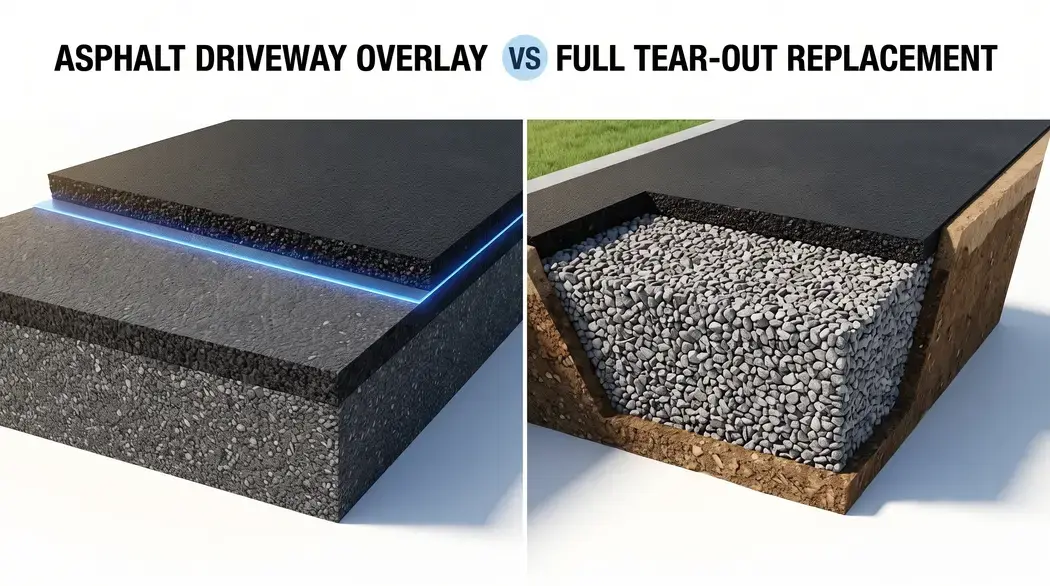
Before planning a paving team, you must find whether your current pavement qualifies for an overlay or needs a full tear-out and sub-base reconstruction.
- Candidate For Overlay: Solid sub-base structure, minor small surface cracks, surface oxidation/fading, and whole drainage slope.
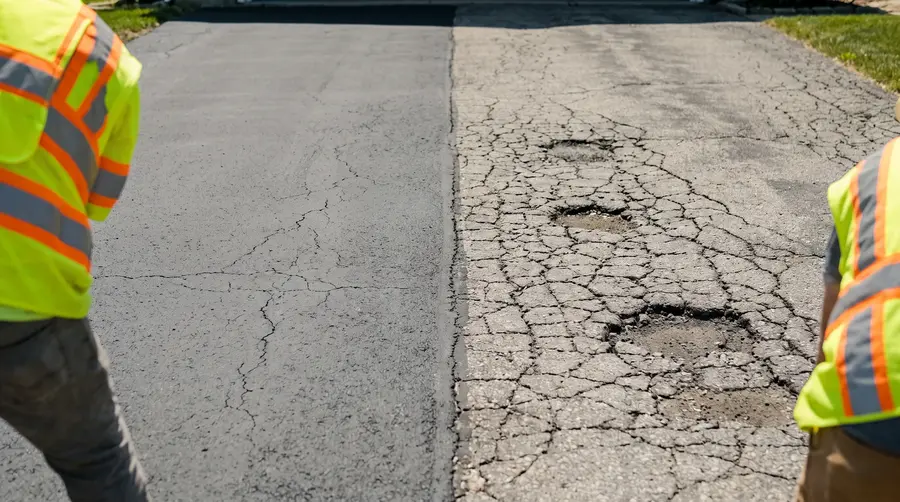
- Requires Full Replacement: Deep alligator/spiderweb cracks, depressed areas or road holes, soft soil subgrade, and major slope issues.
When Is an Asphalt Overlay Possible?
An asphalt overlay is best when the surface damage is solely cosmetic or small to the top damage layer. For an overlay to work, the existing pavement must have:
- A steady, well-compressed crushed stone or road base under it.
- Less than 20–30% whole surface cracking.
- No major water removal defects.
When Full Tear-Out Is Required
Laying asphalt on asphalt over a breaking down foundation is a costly mistake. You must work a complete tear-out and repave if you watch:
- Alligator Cracking: linked, web-like cracks that show a compromised sub-base foundation.
- Sunken Potholes or Soft Spots: Low spots caused by water entry the sub-base layer.
- Edge Crumbles: Common structural deterioration near the borders.
Asphalt Overlay vs Full Replacement: Key Differences
Awareness the functional and financial compromises between resurfacing and a complete replacement helps you make an informed selection for your project.
| Feature | Asphalt Overlay (Resurfacing) | Full Tear-Out & Repave |
| Primary Objective | Surface repair & life growth | Complete structural repair |
| Average Cost | $1.75 – $3.50 per sq. ft. | $4.00 – $8.00 per sq. ft. |
| Lifespan Addition | 10 – 15 years | 20 – 30 years |
| Sub-Base Work | Maintains existing sub-base | Replaces aggregate road base |
| Project Duration | 1 Day | 2 – 4 Days |
Cost Comparison: Resurfacing vs. Repaving
Resurfacing cuts important on labor, heavy earthwork, and removal fees. Because the current asphalt works as an ultra-solid, compressed base layer, contractors do not need to clear tons of soil or transport in fresh aggregate.
Lifespan Expectations for Paving Asphalt Over Asphalt
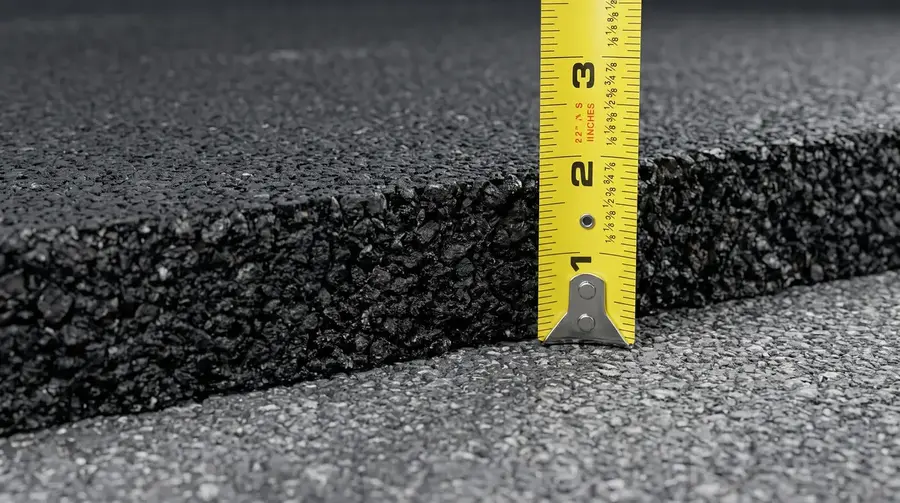
When installed over a steady surface with correct tack coat bonding, a standard 1.5 to 2-inch asphalt overlay adds 10 to 15 years of Functional life.
Pros and Cons of Laying Asphalt on Asphalt
| Category | Pros | Cons |
| Asphalt Overlay (Resurfacing) | 40% – 50% lower cost Fast 1-day installation Reuses existing base | Risk of reflective cracking Raises pavement height/elevation Requires a sound sub-base |
| Full Replacement (Tear-Out & Repave) | Completely new sub-base foundation Longer lifespan (20–30 years) Eliminates existing height issues | High excavation & labor costs Longer completion time (2–3 days) Creates heavy material waste |
Limitations: Reflective Cracking & Elevation Issues
- Reflective Cracking: Cracks in the base layer can slowly show up through the new asphalt surface over time.
- Height & Clearance Limits: Adding 2 inches of new asphalt Increases the overall grade. This can make lip modifications at garage doorways, curbs, or sidewalks.
Step-by-Step Process for Resurfacing Asphalt Driveways
To confirm long-term performance, expert paving contractors use a strict 4-step resurfacing protocol:
Step 1: Surface Cleaning and Sweeping
The current blacktop must be completely cleared of dirt, debris, oil stains, and plants. Any loose gravel or broken surface parts are cleaned away using industrial wire brushes and power blowers.
Step 2: Milling and Edging Adjustments
To avoid uncomfortable lip transitions at garage doors and gutters, contractors perform edge milling. A milling machine crushes down a 12-to-18-inch border throughout nearby concrete driveway entrance so the new asphalt layer rests flush.
Step 3: Applying Tack Coat (Asphalt Bonding Glue)
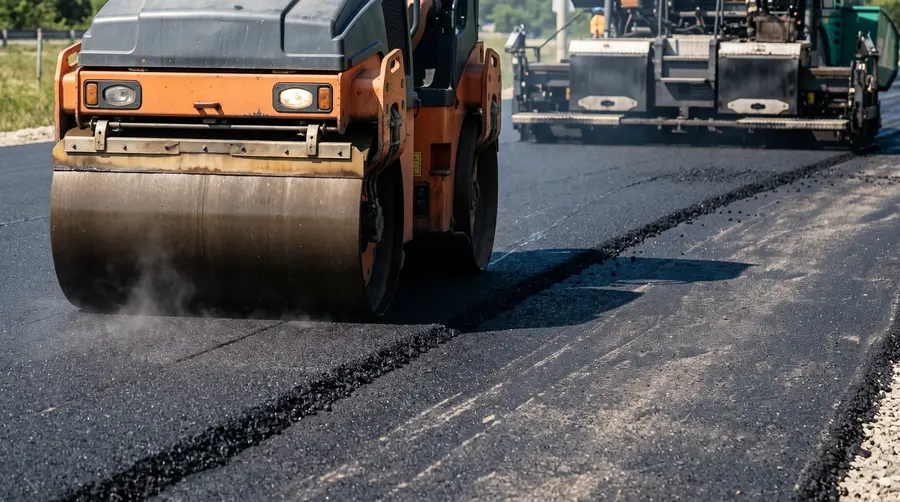
A heavy fluid asphalt mixture – Recognized as a tack coat – is applied uniformly across the whole clean surface. This acts as an industrial glue, by heat bonding the new hot mix layer to the old asphalt pavement.
Step 4: Laying and Compacting the New Asphalt Layer
Hot mix asphalt is extended over the surface at a temperature between 275 F and 300 F. Heavy steel-drum vibratory rollers compress the material down to a smooth, dense 1.5 to 2-inch completed thickness.
How Much Does Laying Asphalt on Asphalt Cost?
On typical, an asphalt overlay costs between $1.75 and $3.50 per square foot for materials and installation.
- Normal 500 sq. ft. Driveway: $875 – $1,750
- Large 1,000 sq. ft. Driveway: $1,750 – $3,500
Factors affecting the final price include current crude oil market rates, local transporting distances, surface fixes prior to paving, and the total thickness purchased.
How to Calculate Materials Needed for an Asphalt Overlay
Exactly figuring out your asphalt requirements is necessary to prevent overpaying on mix or running short during a pour.
How Many Inches of Asphalt Do You Need for Resurfacing?
For typical residential driveways, a compacted depth of 1.5 to 2 inches of hot mix asphalt is the industry-standard. Commercial parking lots carrying more substantial delivery traffic typically require 2.5 to 3 inches.
Estimating Material Tonnage Using Formulas
Hot-mix asphalt has a weight of 145 lbs per cubic foot or roughly 2.05 tons per cubic yard.
To calculate required tonnage manually:
- Volume (cu. ft.) = Length (ft) × Width (ft) × { Thickness (in) } / 12
- Total Tons = Volume (cu. ft.) × 145 lbs/ cu. ft. / 2000
Skip the Manual Math: Avoid calculation errors by using our free Asphalt Calculator to immediately estimate your total tonnage, material volume, and projected costs before asking for contractor quotes.
Cubic Feet to Cubic Yard Conversion Ratio
When purchasing base materials, sub-base aggregate, or asphalt millings from stone pits, volume is often quoted in cubic yards instead than cubic feet.
- 1 Cubic Yard = 27 Cubic Feet
- Change Formula: Cubic Yards = Total cubic Feet / 27
Understanding this basic unit connection makes it easy to change job site foot dimensions into quarry delivery units.
How to Use the Cubic Yard Calculator
If you are preparing a stone sub-base or estimating bulk aggregates before paving,
follow these steps:
- Measure the Site: Note the exact length and width of your driveway area in feet.
- Determine Layer Depth: Choose on your gravel or asphalt depth in inches (e.g., 2 inches for asphalt, 4 inches for base stone).
- Calculate Volume: Input your measurements into our free online Cubic Yard Calculator to obtain instant cubic yardage and tonnage figures.
Alternative Resurfacing Options: Using Asphalt Millings
For countryside driveways, farm entry roads, or cost-conscious projects, recycled asphalt millings provide an excellent alternative to hot-mix asphalt.
Asphalt millings are broken, recycled pavement parts removed during highway milling projects. When apply and rolled under heavy heat, the residual bitumen combines together to form a semi-solid, low-cost pavement. You can estimate required recycled tonnage using a advanced Asphalt Millings Calculator.
How Much do Different Types of Asphalt on Asphalt Cost per Ton?
Asphalt pricing varies based on the specific type required for project:
- Hot Mix Asphalt (HMA): $80 – $160 per ton for key paving project
- Warm Mix Asphalt (WMA): $110 and $210 per ton for eco-friendly.
Frequently Asked Questions (FAQs)
Can you pave over cracked asphalt?
Yes, but only if the cracks are minor fine cracks. Severe alligator cracking or profound sub-base Low spots must be repaired or covered prior to using an asphalt overlay.
What is the cost difference between an asphalt overlay vs replacement?
An asphalt resurfacing costs $1.75 to $3.50 per sq. ft., While a whole tear-out and replacement costs $4.00 to $8.00+ per sq. ft., saving you around 50% on installation expenses.
Can an asphalt patch be covered with an asphalt overlay?
Yes. Using an asphalt fix to fill low spots or localized road holes prior to resurfacing provides a smooth, level base for the new top wear layer.
How thick should an asphalt overlay driveway be?
A home driveway overlay should be 1.5 to 2 inches of compressed hot mix asphalt to balance structural longevity with existing water removal and lip clearances.
Can you lay 2 inches of asphalt over existing asphalt?
Yes, A 2-inch compacted layer of hot-mix asphalt is the industry standard for a residential overlay, provided the existing foundation is structurally sound without deep base cracking.
How long does an asphalt overlay last on a driveway?
An asphalt overlay lasts 10 to 15 years when applied over a clean, well-bonded, and stable base.
How do I calculate material needed using an asphalt quote calculator?
Enter your driveway length, width, and preferred depth (in inches) into an asphalt quote calculator to immediately get exact tonnage and estimated material costs before hiring a contractor
What is the difference between an asphalt overlay and an asphalt milling calculator?
An overlay uses new hot-mix asphalt over existing blacktop, while an asphalt milling calculator estimates the tonnage of broken, recycled asphalt aggregate used for eco-friendly base layers.
Is an asphalt overlay better than a full replacement?
If the sub-base is whole with no major sinking, an overlay is much better cost-effectively providing you 80% of the lifespan of a new driveway at nearly half the cost.
Can you drive on fresh asphalt road immediately?
No, Driving on the fresh road. You should wait at least 24 to 48 hours.
Can you pour concrete on top of asphalt?
No, it is generally not best. Pouring concrete make over a week foundation, Causing the hard concrete layer about to fast crack and shift.
How much does a blacktop driveway cost on average?
A blacktop top driveway costs between $3 and $7 per square foot for materials and installation.
How to bond old asphalt to new asphalt effectively?
Asphalt on Asphalt correctly old asphalt to new asphalt, begin by fully clean the surface to remove dirt, dust and holes, waste. As a tack coat at rate of .04 to .07 per square yard.
What is the average of price of asphalt per ton?
Main hot-mix asphalt generally ranges between $80 and $160 per ton, with a nation average dropping between $110 and $125 per ton.
Can you put blacktop over concrete?
Yes, you can put blacktop (asphalt) over concrete, but only if the current concrete base is structurally sound, stable, and properly prepared.
Final Verdict
Laying asphalt on asphalt (an asphalt overlay) is the most cost-friendly and effective way to restore a discoloration, cracked driveway without paying for a full ground removal. As long as your current pavement has a solid sub-base foundation and no deep alligator cracking, an overlay provides up to 80% of the lifespan of a new driveway at nearly half the cost. Earlier hiring a paving contractor, use our free Asphalt Calculator to enter your measurements, estimate exact material tonnage, and design your project cost with complete confidence.